Kaiming He (Chinese: 何恺明; pinyin: Hé Kǎimíng) is a Chinese computer scientist who primarily researches computer vision and deep learning. He is an associate professor at Massachusetts Institute of Technology and works part-time as a Distinguished Scientist at Google DeepMind. He is known as one of the creators of the residual neural network (ResNet) architecture. == Early life and education == He attended the public Guangzhou Zhixin High School in Guangzhou, Guangdong, China. He scored first place for the total scores in the 2003 Guangdong provincial undergraduate admissions exam. He went to Tsinghua University for undergraduate education and received a Bachelor of Science degree in 2007. In 2007 to 2011, he pursued doctoral studies in information engineering at the Chinese University of Hong Kong at its Multimedia Laboratory, receiving a PhD degree in 2011. His doctoral dissertation was titled Single image haze removal using dark channel prior (2011), and his doctoral adviser was Tang Xiao'ou. == Career == He worked at Microsoft Research Asia from 2011 to 2016 and at Facebook Artificial Intelligence Research from 2016 to 2024. In 2024, he became an associate professor at the Department of Electrical Engineering and Computer Science of the Massachusetts Institute of Technology. His 2016 paper Deep Residual Learning for Image Recognition is the most cited research paper in 5 years according to Google Scholar's reports in 2020 and 2021. == Awards and recognitions == He won ICCV's best paper award (Marr Prize) in 2017 and CVPR's best paper award in 2009 and 2016. He was awarded the 2023 Future Science Prize along with 3 collaborators for "fundamental contribution to artificial intelligence by introducing deep residual learning".
Machine-learned interatomic potential
Machine-learned interatomic potentials (MLIPs), or simply machine learning potentials (MLPs), are interatomic potentials constructed using machine learning. Beginning in the 1990s, researchers have employed such programs to construct interatomic potentials by mapping atomic structures to their potential energies. These potentials are referred to as MLIPs or MLPs. Such machine learning potentials promised to fill the gap between density functional theory, a highly accurate but computationally intensive modelling method, and empirically derived or intuitively-approximated potentials, which were far lighter computationally but substantially less accurate. Improvements in artificial intelligence technology heightened the accuracy of MLPs while lowering their computational cost, increasing the role of machine learning in fitting potentials. Machine learning potentials began by using neural networks to tackle low-dimensional systems. While promising, these models could not systematically account for interatomic energy interactions; they could be applied to small molecules in a vacuum, or molecules interacting with frozen surfaces, but not much else – and even in these applications, the models often relied on force fields or potentials derived empirically or with simulations. These models thus remained confined to academia. Modern neural networks construct highly accurate and computationally light potentials, as theoretical understanding of materials science was increasingly built into their architectures and preprocessing. Almost all are local, accounting for all interactions between an atom and its neighbor up to some cutoff radius. There exist some nonlocal models, but these have been experimental for almost a decade. For most systems, reasonable cutoff radii enable highly accurate results. Almost all neural networks intake atomic coordinates and output potential energies. For some, these atomic coordinates are converted into atom-centered symmetry functions. From this data, a separate atomic neural network is trained for each element; each atomic network is evaluated whenever that element occurs in the given structure, and then the results are pooled together at the end. This process – in particular, the atom-centered symmetry functions which convey translational, rotational, and permutational invariances – has greatly improved machine learning potentials by significantly constraining the neural network search space. Other models use a similar process but emphasize bonds over atoms, using pair symmetry functions and training one network per atom pair. Other models to learn their own descriptors rather than using predetermined symmetry-dictating functions. These models, called message-passing neural networks (MPNNs), are graph neural networks. Treating molecules as three-dimensional graphs (where atoms are nodes and bonds are edges), the model takes feature vectors describing the atoms as input, and iteratively updates these vectors as information about neighboring atoms is processed through message functions and convolutions. These feature vectors are then used to predict the final potentials. The flexibility of this method often results in stronger, more generalizable models. In 2017, the first-ever MPNN model (a deep tensor neural network) was used to calculate the properties of small organic molecules. == Gaussian Approximation Potential (GAP) == One popular class of machine-learned interatomic potential is the Gaussian Approximation Potential (GAP), which combines compact descriptors of local atomic environments with Gaussian process regression to machine learn the potential energy surface of a given system. To date, the GAP framework has been used to successfully develop a number of MLIPs for various systems, including for elemental systems such as carbon, silicon, phosphorus, and tungsten, as well as for multicomponent systems such as Ge2Sb2Te5 and austenitic stainless steel, Fe7Cr2Ni. == Equivariant graph neural networks == A significant limitation of early MPNNs was that they were not inherently equivariant to rotations and reflections of atomic structures — meaning predictions could change depending on how a molecule was oriented in space. Beginning around 2021, a new class of models addressed this by incorporating equivariance directly into the message-passing layers using spherical harmonics and irreducible representations. Notable examples include NequIP (2021), MACE (2022), and GemNet-OC (2022). These equivariant architectures proved substantially more data-efficient and accurate than their predecessors, and became the dominant paradigm for high-accuracy MLIPs. == Universal MLIPs and large-scale datasets == Early MLIPs were system-specific, trained on a few thousand structures of a single material. A major shift occurred with the creation of large, chemically diverse datasets enabling models that generalize across many elements, bonding environments, and application domains — so-called universal MLIPs. A key driver was the Open Catalyst Project (OC20, OC22), a collaboration between Meta AI (FAIR) and Carnegie Mellon University launched in 2020. OC20 comprises approximately 1.3 million DFT relaxations across 82 elements, designed to accelerate the discovery of catalysts for renewable energy applications. It was among the first datasets large enough to train GNNs that generalize across diverse chemical systems, and established a widely-used benchmark for the field. A subsequent dataset, Open Direct Air Capture (OpenDAC 2023 and OpenDAC 2025), applied the same approach to carbon capture, providing a large computational database of metal-organic frameworks and sorbent candidates evaluated for CO₂ capture, generated using nearly 400 million CPU hours of quantum chemistry calculations in collaboration with Georgia Tech. These datasets revealed a new challenge: the GNN architectures most effective for atomic simulations were memory-intensive, as they model higher-order interactions between triplets or quadruplets of atoms, making it difficult to scale model size. Graph Parallelism, introduced by Sriram et al. (ICLR 2022), addressed this by distributing a single input graph across multiple GPUs — a distinct strategy from data parallelism (which distributes training examples) or model parallelism (which distributes layers). This enabled training GNNs with hundreds of millions to billions of parameters for the first time. Building on these foundations, Meta FAIR released the Universal Model for Atoms (UMA) in 2025, trained on approximately 500 million unique 3D atomic structures spanning molecules, materials, and catalysts — the largest training run to date for an MLIP. UMA introduced a Mixture of Linear Experts (MoLE) architecture, enabling one model to learn from datasets generated by different DFT codes and settings without significant inference overhead. It matches or surpasses specialized models across catalysis, materials, and molecular benchmarks without task-specific fine-tuning, and has been described as marking a "pre/post-UMA" divide in the field. == Applications == Catalyst discovery: MLIPs have significantly accelerated the computational screening of heterogeneous catalysts by replacing expensive DFT relaxations with fast neural network surrogates. The Open Catalyst Project explicitly targets this application, aiming to identify new catalysts for green hydrogen production and other renewable energy reactions. Carbon capture: The OpenDAC project applies universal MLIPs to screening sorbent materials for direct air capture of CO₂, a key technology for climate change mitigation. AI-accelerated screening allows evaluation of orders of magnitude more candidate materials than traditional DFT workflows. Drug discovery and molecular design: MLIPs are increasingly used in pharmaceutical research to model molecular conformations and binding energies. The Open Molecules 2025 (OMol25) dataset, released by Meta FAIR in 2025, provides high-accuracy calculations for a large set of molecular systems to support this use case. Materials discovery: Universal MLIPs enable high-throughput screening of novel inorganic materials, including battery electrolytes, semiconductors, and superconductors, by rapidly estimating stability and properties across large chemical spaces.
Depop
Depop Limited is a social e-commerce company based in London, with additional offices in Milan and New York City. The company allows users to buy and sell items, which are mostly used and vintage pieces of clothing. == History == Depop was founded in 2011 by entrepreneur Simon Beckerman at an Italian technological incubator and business start-up centre, H-Farm. Beckerman came up with the original outline of the application during his time working on PIG, a fashion magazine based in Italy that he co-founded. The idea was to create a platform where products shown in the magazine could be purchased by users online. This idea turned into a concept similar to a flea market but on the internet, where people could sell their items while also being in control of advertising, public relations, and the creative process behind their accounts. While being financially supported by H-Farm, Beckerman worked within a team to create and lay out the Depop application while exposing it to numerous investors. In 2013, Beckerman became a member of the company's board to help improve the application and business while concurrently ceding his role of CEO. Maria Raga, Depop's co-founder and former CEO, took on the role of vice president of operations in 2014, and in 2016, she became chief executive. According to Raga, the main goal while developing Depop was to become the next Airbnb or Spotify, but to make an impact on fashion. Paolo Barberis and Nana Bianca were two of the first investors in the platform in 2012 with a seed investment. Its headquarters were moved to London in 2012. Depop expanded and opened additional offices in Milan and New York City. Beckerman raised €1 million in funding in October 2013 from Red Circle Investment and brought on Faroese Runar Reistrup as new CEO. In 2015, Depop secured another investment of $8 million from Balderton Capital and HV Capital. In March 2016, former CEO, Runar Reistrup, stated that Depop's growth was achieved through word of mouth. During his time as CEO, this growth involved taking Depop as a startup and working to raise funds to eventually amass a significant user base within the United States. In June 2019, Depop raised $62 million in Series C from General Atlantic to fund its expansion. Previous investors HV Capital, Balderton Capital, Creandum, Octopus Ventures, TempoCap and Sebastian Siemiatkowski also participated. During this time, Depop held workshops and conversations as part of their Depop Live NY events, and the company also opened a London store through their partnership with Selfridges. In 2020, Depop's gross merchandise sales and revenue both more than doubled to $650 million and $70 million respectively. This may be attributed to Depop's responsiveness to user trends, its lack of issues regarding inventory management, and the increase in users looking to resell. As of 2024, Depop has over 35 million users, according to their website. Depop is popular for Gen Z and young millennials, it is the 10th most-visited shopping platform for Gen Z consumers in the US, and, in a poll conducted by The Strategist in 2019, Depop was voted by teenagers as their favorite resale website. === Acquisition by Etsy === In June 2021, Depop was acquired by Etsy for $1.6 billion in cash, making it Etsy's most expensive acquisition; however, Depop continues to operate as a standalone brand independent from Etsy. This means that in addition to Depop keeping its existing team, the company retained its London location. At the time of acquisition, Etsy CEO Josh Silverman’s goal was to counteract the influx of buyers starting to go back to physical shops for their purchases. He saw Depop for its potential as a platform supporting a variety of products and creating a greater community of users. According to Silverman, Depop may expand and improve its services for its significant Gen Z user base. For Etsy, this acquisition maintains the company's foothold in the clothing industry and allows the company to expand its customer base to a younger demographic; at the same time, Depop is now able to make use of Etsy's company operations. When Maria Raga relinquished her position as Depop's CEO in 2022, Etsy assigned the role to Kruti Patel Goyal, who was Etsy's former chief product officer and a leader there for eleven years. When Goyal was appointed president and chief growth officer for Etsy in May, Peter Semple, former chief marketing officer, was assigned CEO of Depop officially on August 1st. === Acquisition by eBay === In February 2026, Etsy announced a proposed sale of Depop to eBay for $1.2 billion that was estimated to close within the year. == Business model == === Selling === Depop operates as a marketplace and social platform, where users can follow friends and other influencers to view their buying and selling activities. Through the platform, users are able to sell branded and designer items, as well as vintage pieces. Depop users are also encouraged by the platform to use other social networking services such as Instagram to promote their shop profiles. Celebrities have resold their own items on Depop, with some donating proceeds to charitable causes. Depop's user interface is modeled after that of Instagram. According to Depop, users who list and sell items provide their own photos with item descriptions. Users also note their designer items' authenticity and if they include any labels, tags, and receipts. These listings will appear in users' feeds. The platform's "Explore" page features items picked out by Depop staff. According to Depop, purchases are made via Apple Pay, Google Pay, credit and debit cards, and Klarna. Depop payments stay in-app, allowing for the company to mediate disputes and process refunds. Depop payments allow sellers to directly receive their payments in their bank account. To get paid by Depop, a seller has to add a bank account and verify their identification by uploading an ID. On July 18, 2024, Depop CEO Kruti Patel Goyal announced the removal of selling fees for US sellers, while maintaining a payment processing fee. This policy adjustment aimed to enhance seller revenue and support the growth of the second-hand market. === Buying === A Depop transaction includes the agreed sale price of the item, shipping fees, VAT or other applicable taxes and duties, and the marketplace fee for buyers in the U.S. or U.K. For international deliveries, packages may be subject to import taxes, customs duties, or fees, payable upon arrival or at checkout if Depop collects the tax on behalf of the buyer. For domestic purchases, relevant taxes may be collected by the seller or charged by the platform at checkout, ensuring no additional taxes are due upon delivery. For users in Australia, the United Kingdom, and the United States, Depop allows users to receive a full refund if their item does not arrive, arrives damaged, or is considerably different from the original when the issue is reported within 30 days. === Competitors === As of June 2021, Depop's competitors include Vinted, a platform founded by Milda Mitkute and Justas Janauskas in 2008 and valued at €3.5 billion, as well as the U.S. resale site Poshmark, valued at $3.5 billion. Additional competitors include Grailed, a peer-to-peer e-commerce site founded in 2014 that is recognized for its high-end second-hand menswear and streetwear, and Vestiaire Collection, a European resale app established in 2009 which specializes in authenticated pre-owned luxury items. The popularity of Depop has negatively impacted traditional second-hand stores, which can struggle to compete due to high labor costs and quality demands. There is an oversupply of clothes with the rise of fast fashion; this has taken a toll on the revenue aspect of the second-hand clothing industry. == Criticism == In November 2019, Business of Fashion reported that users within the Depop app were receiving sexually suggestive messages. In February 2020, Jessica Hamilton, a Depop buyer, reported that she found many scammers on the platform. She noticed this issue after she attempted to purchase a Nintendo Switch from a seller who would suspiciously only accept payment through a direct bank transfer without buyer protection. Hamilton blamed the company for its lack of action and relaxed security measures compared to other e-commerce sites, which made the platform especially susceptible to hackers. Without a clear strategy for managing scams, Depop lost some users' trust because of its negligence. In October 2020, some Depop buyers were tricked into paying sellers directly to bypass Depop's buyer protections, and the Depop sellers then sold those users' information on the dark web. In response, Depop claimed that it would improve security through mandatory password updates and multi-factor authentication. Users have criticized Depop for belatedly taking action against this issue.
Control engineering
Control engineering, also known as control systems engineering and, in some European countries, automation engineering, is an engineering discipline that deals with control systems, applying control theory to design equipment and systems with desired behaviors in control environments. The discipline of controls overlaps and is usually taught along with electrical engineering, chemical engineering and mechanical engineering at many institutions around the world. The practice uses sensors and detectors to measure the output performance of the process being controlled; these measurements are used to provide corrective feedback helping to achieve the desired performance. Systems designed to perform without requiring human input are called automatic control systems (such as cruise control for regulating the speed of a car). Multi-disciplinary in nature, control systems engineering activities focus on implementation of control systems mainly derived by mathematical modeling of a diverse range of systems. == Overview == Modern day control engineering is a relatively new field of study that gained significant attention during the 20th century with the advancement of technology. It can be broadly defined or classified as practical application of control theory. Control engineering plays an essential role in a wide range of control systems, from simple household washing machines to high-performance fighter aircraft. It seeks to understand physical systems, using mathematical modelling, in terms of inputs, outputs and various components with different behaviors; to use control system design tools to develop controllers for those systems; and to implement controllers in physical systems employing available technology. A system can be mechanical, electrical, fluid, chemical, financial or biological, and its mathematical modelling, analysis and controller design uses control theory in one or many of the time, frequency and complex-s domains, depending on the nature of the design problem. Control engineering is the engineering discipline that focuses on the modeling of a diverse range of dynamic systems (e.g. mechanical systems) and the design of controllers that will cause these systems to behave in the desired manner. Although such controllers need not be electrical, many are and hence control engineering is often viewed as a subfield of electrical engineering. Electrical circuits, digital signal processors and microcontrollers can all be used to implement control systems. Control engineering has a wide range of applications from the flight and propulsion systems of commercial airliners to the cruise control present in many modern automobiles. In most cases, control engineers utilize feedback when designing control systems. This is often accomplished using a proportional–integral–derivative controller (PID controller) system. For example, in an automobile with cruise control the vehicle's speed is continuously monitored and fed back to the system, which adjusts the motor's torque accordingly. Where there is regular feedback, control theory can be used to determine how the system responds to such feedback. In practically all such systems stability is important and control theory can help ensure stability is achieved. Although feedback is an important aspect of control engineering, control engineers may also work on the control of systems without feedback. This is known as open loop control. A classic example of open loop control is a washing machine that runs through a pre-determined cycle without the use of sensors. == History == Automatic control systems were first developed over two thousand years ago. The first feedback control device on record is thought to be the ancient Ktesibios's water clock in Alexandria, Egypt, around the third century BCE. It kept time by regulating the water level in a vessel and, therefore, the water flow from that vessel. This certainly was a successful device as water clocks of similar design were still being made in Baghdad when the Mongols captured the city in 1258 CE. A variety of automatic devices have been used over the centuries to accomplish useful tasks or simply just to entertain. The latter includes the automata, popular in Europe in the 17th and 18th centuries, featuring dancing figures that would repeat the same task over and over again; these automata are examples of open-loop control. Milestones among feedback, or "closed-loop" automatic control devices, include the temperature regulator of a furnace attributed to Drebbel, circa 1620, and the centrifugal flyball governor used for regulating the speed of steam engines by James Watt in 1788. In his 1868 paper "On Governors", James Clerk Maxwell was able to explain instabilities exhibited by the flyball governor using differential equations to describe the control system. This demonstrated the importance and usefulness of mathematical models and methods in understanding complex phenomena, and it signaled the beginning of mathematical control and systems theory. Elements of control theory had appeared earlier but not as dramatically and convincingly as in Maxwell's analysis. Control theory made significant strides over the next century. New mathematical techniques, as well as advances in electronic and computer technologies, made it possible to control significantly more complex dynamical systems than the original flyball governor could stabilize. New mathematical techniques included developments in optimal control in the 1950s and 1960s followed by progress in stochastic, robust, adaptive, nonlinear control methods in the 1970s and 1980s. Applications of control methodology have helped to make possible space travel and communication satellites, safer and more efficient aircraft, cleaner automobile engines, and cleaner and more efficient chemical processes. Before it emerged as a unique discipline, control engineering was practiced as a part of mechanical engineering and control theory was studied as a part of electrical engineering since electrical circuits can often be easily described using control theory techniques. In the first control relationships, a current output was represented by a voltage control input. However, not having adequate technology to implement electrical control systems, designers were left with the option of less efficient and slow responding mechanical systems. A very effective mechanical controller that is still widely used in some hydro plants is the governor. Later on, previous to modern power electronics, process control systems for industrial applications were devised by mechanical engineers using pneumatic and hydraulic control devices, many of which are still in use today. === Mathematical modelling === David Quinn Mayne, (1930–2024) was among the early developers of a rigorous mathematical method for analysing Model predictive control algorithms (MPC). It is currently used in tens of thousands of applications and is a core part of the advanced control technology by hundreds of process control producers. MPC's major strength is its capacity to deal with nonlinearities and hard constraints in a simple and intuitive fashion. His work underpins a class of algorithms that are probably correct, heuristically explainable, and yield control system designs which meet practically important objectives. == Control systems == == Control theory == == Education == At many universities around the world, control engineering courses are taught primarily in electrical engineering and mechanical engineering, but some courses can be instructed in mechatronics engineering, and aerospace engineering. In others, control engineering is connected to computer science, as most control techniques today are implemented through computers, often as embedded systems (as in the automotive field). The field of control within chemical engineering is often known as process control. It deals primarily with the control of variables in a chemical process in a plant. It is taught as part of the undergraduate curriculum of any chemical engineering program and employs many of the same principles in control engineering. Other engineering disciplines also overlap with control engineering as it can be applied to any system for which a suitable model can be derived. However, specialised control engineering departments do exist, for example, in Italy there are several master in Automation & Robotics that are fully specialised in Control engineering or the Department of Automatic Control and Systems Engineering at the University of Sheffield or the Department of Robotics and Control Engineering at the United States Naval Academy and the Department of Control and Automation Engineering at the Istanbul Technical University. Control engineering has diversified applications that include science, finance management, and even human behavior. Students of control engineering may start with a linear control system course dealing with the time and complex-s domain, which req
Act! LLC
ACT! (previously known as Activity Control Technology, Automated Contact Tracking, ACT! by Sage, and Sage ACT!) is a customer relationship management and marketing automation software platform designed for small and medium-sized businesses. It has over 2.8 million registered users as of December 2014. == History == The company Conductor Software was founded in 1986, in Dallas, Texas, by Pat Sullivan and Mike Muhney. The original name for the software was Activity Control Technology; it was renamed to Automated Contact Tracking, later abbreviated to ACT. The name of the company was subsequently changed to Contact Software International and it was sold in 1993 to Symantec Corporation, who in 1999 then sold it to SalesLogix. The Sage Group purchased Interact Commerce (formerly SalesLogix) in 2001 through Best Software, then its North American software division. Swiftpage acquired it in 2013. Beginning with the 2006 version, the name was styled ACT! by Sage, and in 2010 revised to Sage ACT!. Following its 2013 acquisition by Swiftpage, it was renamed to ACT! Swiftpage. In May 2018, ACT! was sold to SFW Advisors. In December 2018, Kuvana, a marketing automation software solution, was acquired by SFW and merged with ACT! This add-on is now a complementary service to the core CRM solution. In December 2019, ACT! hired Steve Oriola as chairman and CEO. In 2020, Swiftpage changed its company name to ACT!. In March 2023, ACT! hired Bruce Reading as President and CEO. == Software == ACT! features include contact, company and opportunity management, a calendar, marketing automation and e-marketing tools, reports, interactive dashboards with graphical visualizations, and the ability to track prospective customers. ACT! integrates with Microsoft Word, Excel, Outlook, Google Contacts, Gmail, and other applications via Zapier. For custom integrations, ACT! has an in-built API. ACT! can be accessed from Windows desktops (Win7 and later) with local or network shared database; synchronized to laptops or remote officers; Citrix or Remote Desktop; Web browsers (Premium only) with self or SaaS hosting; smartphones and tablets via HTML5 Web (Premium only); smartphones and tablets via sync with Handheld Contact.
Outline of robotics
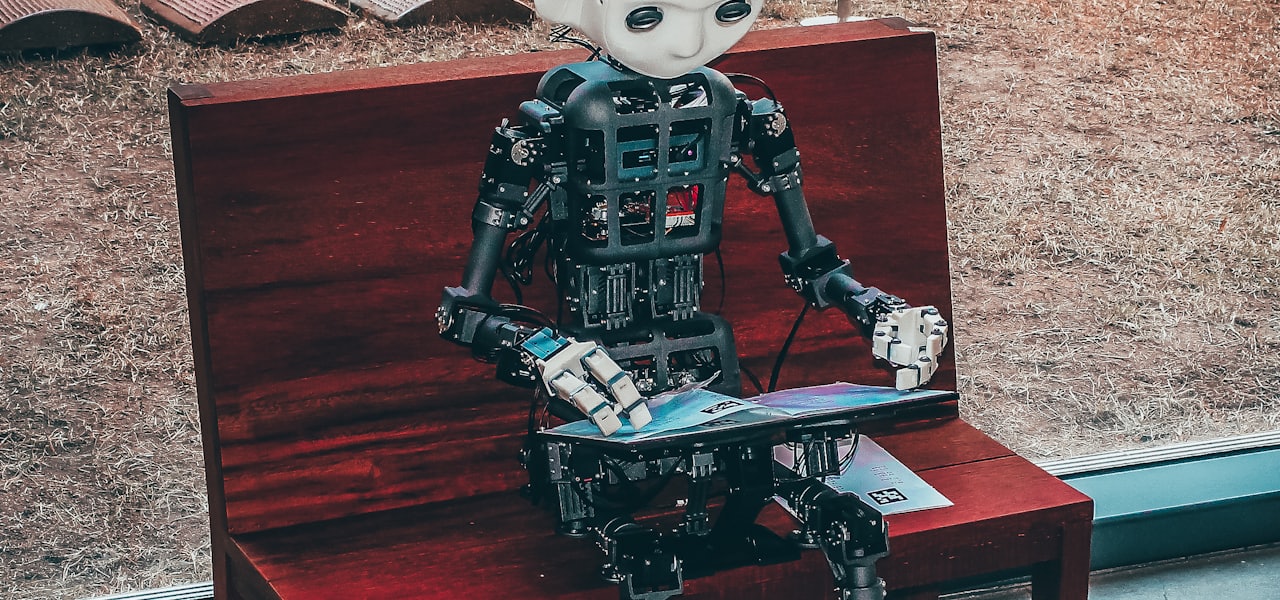
The following outline is provided as an overview of and topical guide to robotics: Robotics is a branch of mechanical engineering, electrical engineering and computer science that deals with the design, construction, operation, and application of robots, as well as computer systems for their control, sensory feedback, and information processing. These technologies deal with automated machines that can take the place of humans in dangerous environments or manufacturing processes, or resemble humans in appearance, behaviour, and or cognition. Many of today's robots are inspired by nature contributing to the field of bio-inspired robotics. The word "robot" was introduced to the public by Czech writer Karel Čapek in his play R.U.R. (Rossum's Universal Robots), published in 1920. The term "robotics" was coined by Isaac Asimov in his 1941 science fiction short-story "Liar!" == Nature of robotics == Robotics can be described as: An applied science – scientific knowledge transferred into a physical environment. A branch of computer science – A branch of electrical engineering – A branch of mechanical engineering – Research and development – A branch of technology – == Branches of robotics == Adaptive control – control method used by a controller which must adapt to a controlled system with parameters which vary, or are initially uncertain. For example, as an aircraft flies, its mass will slowly decrease as a result of fuel consumption; a control law is needed that adapts itself to such changing conditions. Aerial robotics – development of unmanned aerial vehicles (UAVs), commonly known as drones, aircraft without a human pilot aboard. Their flight is controlled either autonomously by onboard computers or by the remote control of a pilot on the ground or in another vehicle. Android science – interdisciplinary framework for studying human interaction and cognition based on the premise that a very humanlike robot (that is, an android) can elicit human-directed social responses in human beings. Anthrobotics – science of developing and studying robots that are either entirely or in some way human-like. Artificial intelligence – the intelligence of machines and the branch of computer science that aims to create it. Artificial neural networks – a mathematical model inspired by biological neural networks. Autonomous car – an autonomous vehicle capable of fulfilling the human transportation capabilities of a traditional car Autonomous research robotics – Bayesian network – BEAM robotics – a style of robotics that primarily uses simple analogue circuits instead of a microprocessor in order to produce an unusually simple design (in comparison to traditional mobile robots) that trades flexibility for robustness and efficiency in performing the task for which it was designed. Behavior-based robotics – the branch of robotics that incorporates modular or behavior based AI (BBAI). Bio-inspired robotics – making robots that are inspired by biological systems. Biomimicry and bio-inspired design are sometimes confused. Biomimicry is copying the nature while bio-inspired design is learning from nature and making a mechanism that is simpler and more effective than the system observed in nature. Biomimetic – see Bionics. Biomorphic robotics – a sub-discipline of robotics focused upon emulating the mechanics, sensor systems, computing structures and methodologies used by animals. Bionics – also known as biomimetics, biognosis, biomimicry, or bionical creativity engineering is the application of biological methods and systems found in nature to the study and design of engineering systems and modern technology. Biorobotics – a study of how to make robots that emulate or simulate living biological organisms mechanically or even chemically. Cloud robotics – is a field of robotics that attempts to invoke cloud technologies such as cloud computing, cloud storage, and other Internet technologies centered around the benefits of converged infrastructure and shared services for robotics. Cognitive robotics – views animal cognition as a starting point for the development of robotic information processing, as opposed to more traditional Artificial Intelligence techniques. Clustering – Computational neuroscience – study of brain function in terms of the information processing properties of the structures that make up the nervous system. Robot control – a study of controlling robots Robotics conventions – Data mining Techniques – Degrees of freedom – in mechanics, the degree of freedom (DOF) of a mechanical system is the number of independent parameters that define its configuration. It is the number of parameters that determine the state of a physical system and is important to the analysis of systems of bodies in mechanical engineering, aeronautical engineering, robotics, and structural engineering. Developmental robotics – a methodology that uses metaphors from neural development and developmental psychology to develop the mind for autonomous robots Digital control – a branch of control theory that uses digital computers to act as system controllers. Digital image processing – the use of computer algorithms to perform image processing on digital images. Dimensionality reduction – the process of reducing the number of random variables under consideration, and can be divided into feature selection and feature extraction. Distributed robotics – Electronic stability control – is a computerized technology that improves the safety of a vehicle's stability by detecting and reducing loss of traction (skidding). Evolutionary computation – Evolutionary robotics – a methodology that uses evolutionary computation to develop controllers for autonomous robots Extended Kalman filter – Flexible Distribution functions – Feedback control and regulation – Human–computer interaction – a study, planning and design of the interaction between people (users) and computers Human robot interaction – a study of interactions between humans and robots Intelligent vehicle technologies – comprise electronic, electromechanical, and electromagnetic devices - usually silicon micromachined components operating in conjunction with computer controlled devices and radio transceivers to provide precision repeatability functions (such as in robotics artificial intelligence systems) emergency warning validation performance reconstruction. Computer vision – Machine vision – Kinematics – study of motion, as applied to robots. This includes both the design of linkages to perform motion, their power, control and stability; also their planning, such as choosing a sequence of movements to achieve a broader task. Laboratory robotics – the act of using robots in biology or chemistry labs Robot learning – learning to perform tasks such as obstacle avoidance, control and various other motion-related tasks Direct manipulation interface – In computer science, direct manipulation is a human–computer interaction style which involves continuous representation of objects of interest and rapid, reversible, and incremental actions and feedback. The intention is to allow a user to directly manipulate objects presented to them, using actions that correspond at least loosely to the physical world. Manifold learning – Microrobotics – a field of miniature robotics, in particular mobile robots with characteristic dimensions less than 1 mm Motion planning – (a.k.a., the "navigation problem", the "piano mover's problem") is a term used in robotics for the process of detailing a task into discrete motions. Motor control – information processing related activities carried out by the central nervous system that organize the musculoskeletal system to create coordinated movements and skilled actions. Nanorobotics – the emerging technology field creating machines or robots whose components are at or close to the scale of a nanometer (10−9 meters). Passive dynamics – refers to the dynamical behavior of actuators, robots, or organisms when not drawing energy from a supply (e.g., batteries, fuel, ATP). Programming by Demonstration – an End-user development technique for teaching a computer or a robot new behaviors by demonstrating the task to transfer directly instead of programming it through machine commands. Quantum robotics – a subfield of robotics that deals with using quantum computers to run robotics algorithms more quickly than digital computers can. Rapid prototyping – automatic construction of physical objects via additive manufacturing from virtual models in computer aided design (CAD) software, transforming them into thin, virtual, horizontal cross-sections and then producing successive layers until the items are complete. As of June 2011, used for making models, prototype parts, and production-quality parts in relatively small numbers. Reinforcement learning – an area of machine learning in computer science, concerned with how an agent ought to take actions in an environment so as to maximize some notion of cumulative reward. Robot
COVID-19 apps
COVID-19 apps include mobile-software applications for digital contact-tracing—i.e. the process of identifying persons ("contacts") who may have been in contact with an infected individual—deployed during the COVID-19 pandemic. Numerous tracing applications have been developed or proposed, with official government support in some territories and jurisdictions. Several frameworks for building contact-tracing apps have been developed. Privacy concerns have been raised, especially about systems that are based on tracking the geographical location of app users. Less overtly intrusive alternatives include the co-option of Bluetooth signals to log a user's proximity to other cellphones. (Bluetooth technology has form in tracking cell-phones' locations.)) On 10 April 2020, Google and Apple jointly announced that they would integrate functionality to support such Bluetooth-based apps directly into their Android and iOS operating systems. India's COVID-19 tracking app Aarogya Setu became the world's fastest growing application—beating Pokémon Go—with 50 million users in the first 13 days of its release. == Rationale == Contact tracing is an important tool in infectious disease control, but as the number of cases rises time constraints make it more challenging to effectively control transmission. Digital contact tracing, especially if widely deployed, may be more effective than traditional methods of contact tracing. In a March 2020 model by the University of Oxford Big Data Institute's Christophe Fraser's team, a coronavirus outbreak in a city of one million people is halted if 80% of all smartphone users take part in a tracking system; in the model, the elderly are still expected to self-isolate en masse, but individuals who are neither symptomatic nor elderly are exempt from isolation unless they receive an alert that they are at risk of carrying the disease. Some proponents advocate for legislation exempting certain COVID-19 apps from general privacy restrictions. == Issues == === Uptake === Ross Anderson, professor of security engineering at Cambridge University, listed a number of potential practical problems with app-based systems, including false positives and the potential lack of effectiveness if takeup of the app is limited to only a small fraction of the population. In Singapore, only one person in three had downloaded the TraceTogether app by the end of June 2020, despite legal requirements for most workers; the app was also underused, as it required users to keep it open at all times on iOS. A team at the University of Oxford simulated the effect of a contact tracing app on a city of 1 million. They estimated that if the app was used in conjunction with the shielding of over-70s, then 56% of the population would have to be using the app for it to suppress the virus. This would be equivalent to 80% of smartphone users in the United Kingdom. They found that the app could still slow the spread of the virus if fewer people downloaded it, with one infection being prevented for every one or two users. In August 2020, the American Civil Liberties Union (ACLU) argued that there were disparities in smartphone use between demographics and minority groups, and that "even the most comprehensive, all-seeing contact tracing system is of little use without social and medical systems in place to help those who may have the virus — including access to medical care, testing, and support for those who are quarantined." === App store restrictions === Addressing concerns about the spread of misleading or harmful apps, Apple, Google and Amazon set limits on which types of organizations could add coronavirus-related apps to its App Store, limiting them to only "official" or otherwise reputable organizations. === Ethical principles of mass surveillance using COVID-19 contact tracing apps === The advent of COVID-19 contact tracing apps has led to concerns around privacy, the rights of app users, and governmental authority. The European Convention on Human Rights, the International Covenant on Civil and Political Rights (ICCPR) and the United Nations and the Siracusa Principles have outlined 4 principles to consider when looking at the ethical principles of mass surveillance with COVID-19 contact tracing apps. These are necessity, proportionality, scientific validity, and time boundedness. Necessity is defined as the idea that governments should only interfere with a person's rights when deemed essential for public health interests. The potential risks associated with infringements of personal privacy must be outweighed by the possibility of reducing significant harm to others. Potential benefits of contact-tracing apps that may be considered include allowing for blanket population-level quarantine measures to be lifted sooner and the minimization of people under quarantine. Hence, some contend that contact-tracing apps are justified as they may be less intrusive than blanket quarantine measures. Furthermore, the delay of an effective contact-tracing app with significant health and economic benefits may be considered unethical. Proportionality refers to the concept that a contact tracing app's potential negative impact on a person's rights should be justifiable by the severity of the health risks that are being addressed. Apps must use the most privacy-preserving options available to achieve their goals, and the selected option should not only be a logical option for achieving the goal but also an effective one. Scientific validity evaluates whether an app is effective, timely and accurate. Traditional manual contact-tracing procedures are not efficient enough for the COVID-19 pandemic, and do not consider asymptomatic transmission. Contact-tracing apps, on the other hand, can be effective COVID-19 contact-tracing tools that reduce R value to less than 1, leading to sustained epidemic suppression. However, for apps to be effective, there needs to be a minimum 56-60% uptake in the population. Apps should be continually modified to reflect current knowledge on the diseases being monitored. Some argue that contact-tracing apps should be considered societal experimental trials where results and adverse effects are evaluated according to the stringent guidelines of social experiments. Analyses should be conducted by independent research bodies and published for wide dissemination. Despite the current urgency of our pandemic situation, we should still adhere to the standard rigors of scientific evaluation. Time boundedness describe the need for establishing legal and technical sunset clauses so that they are only allowed to operate as long as necessary to address the pandemic situation. Apps should be withdrawn as soon as possible after the end of the pandemic. If the end of the pandemic cannot be predicted, the use of apps should be regularly reviewed and decisions about continued use should be made at each review. Collected data should only be retained by public health authorities for research purposes with clear stipulations on how long the data will be held for and who will be responsible for security, oversight, and ownership. === Privacy, discrimination and marginalisation concerns === The American Civil Liberties Union (ACLU) has published a set of principles for technology-assisted contact tracing and Amnesty International and over 100 other organizations issued a statement calling for limits on this kind of surveillance. The organisations declared eight conditions on governmental projects: surveillance would have to be "lawful, necessary and proportionate"; extensions of monitoring and surveillance would have to have sunset clauses; the use of data would have to be limited to COVID-19 purposes; data security and anonymity would have to be protected and shown to be protected based on evidence; digital surveillance would have to address the risk of exacerbating discrimination and marginalisation; any sharing of data with third parties would have to be defined in law; there would have to be safeguards against abuse and the rights of citizens to respond to abuses; "meaningful participation" by all "relevant stakeholders" would be required, including that of public health experts and marginalised groups. The German Chaos Computer Club (CCC) and Reporters Without Borders also issued checklists. The Exposure Notification service intends to address the problem of persistent surveillance by removing the tracing mechanism from their device operating systems once it is no longer needed. On 20 April 2020, it was reported that over 300 academics had signed a statement favouring decentralised proximity tracing applications over centralised models, given the difficulty in precluding centralised options being used "to enable unwarranted discrimination and surveillance." In a centralised model, a central database records the ID codes of meetings between users. In a decentralised model, this information is recorded on individual phones, with the role of the central